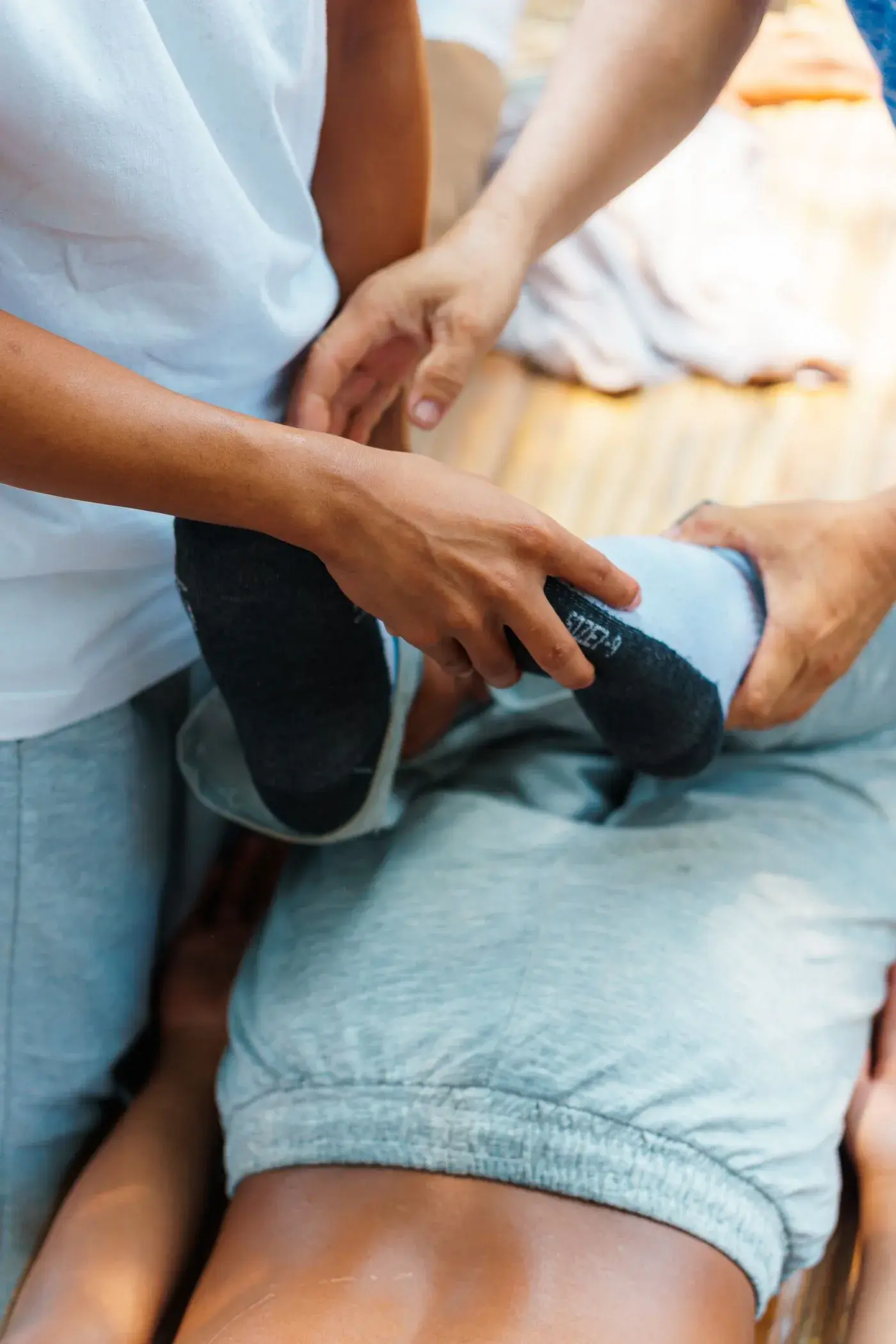
Describe what your joint cannot do comfortably.
Reaching overhead, climbing stairs, gripping an object, and standing from a chair are different movements. Tell the clinician which tasks changed after your injury, where you feel discomfort, and whether the joint feels unstable.
Symptoms do not identify a diagnosis by themselves. A clinician considers the mechanism of injury, examination, and relevant medical history before recommending further steps.
Bring the history that matters.
Mention earlier injuries or surgery involving the same area, any new swelling, and any previous imaging. If you use a brace or support, tell the clinician who recommended it and how it affects your symptoms.
Discuss the options and the reasons behind them.
Ask whether your symptoms need imaging, a specialist referral, rehabilitation, or another type of care. If a procedure is proposed, ask about its purpose, alternatives, potential risks, and expected follow-up.
Do not assume that every painful joint needs an injection or surgery. A visit is an opportunity to understand the options relevant to your own examination.
Make everyday function part of follow-up.
Choose a few ordinary tasks to discuss at the next visit. Note whether those tasks have become easier or harder and whether symptoms changed afterward. Seek prompt care for severe symptoms or a new inability to use the injured area.
Further reading
NIAMS · Sports injuries: diagnosis and treatmentThis content is for general education and visit planning. It does not establish a diagnosis, medical relationship, or treatment plan. Individual advice comes from your treating clinician.