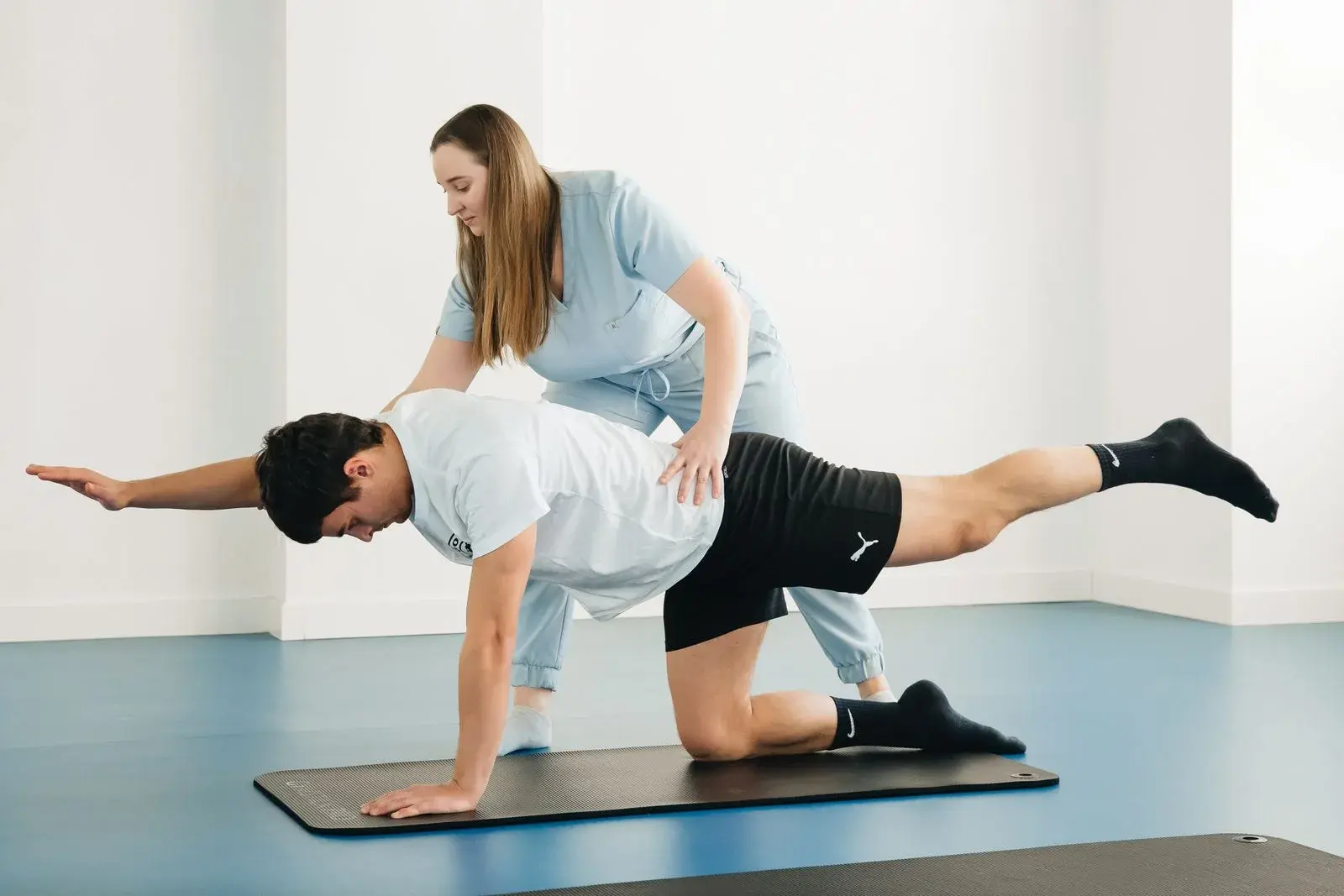
Start with the activity that matters to you.
“I want to get active again” can mean very different things. Tell your clinician whether you want to walk with a friend, lift at work, return to the gym, or play a sport. Be specific about the movement, duration, and demands involved.
Your plan should reflect your injury and assessment. An online timeline cannot tell you when an injured area is ready.
Ask about the next manageable step.
Ask what you can do now, what should wait, and what progress would support a change. If a rehabilitation professional is involved, make sure you understand how their advice fits the overall plan.
Do not work through pain from an injury. Contact your clinician about symptoms that persist or worsen as activity changes.
Think about the setting, too.
A return to activity may involve more than the movement itself. Discuss uneven surfaces, carrying equipment, a long drive beforehand, or work tasks that cannot easily be paused. These details help make advice useful in the real world.
Separate a good day from clearance.
Feeling better is welcome, but it is not the same as being cleared for every activity. Ask which parts of your usual routine are appropriate and whether a written plan would help. If advice from different sources seems inconsistent, bring that question to the clinician who is coordinating your care.
You do not need to compare your progress with a friend or an online recovery story. Different injuries and medical histories can lead to different recommendations. A plan that is clear about your next step is more useful than a deadline borrowed from someone else.
Prepare for the ordinary logistics.
Consider who can help with tasks you have been advised to limit and how you will get to follow-up visits. If your hobby requires equipment, lifting, or a long drive, describe those demands rather than naming the hobby alone. A discussion about returning to gardening, for example, should include carrying supplies and working at ground level.
For an active job, ask how any guidance should be communicated to your employer and when it should be reviewed. If a claim or authorization is involved, confirm administrative requirements with the appropriate contact. That paperwork is separate from the clinician’s assessment of what your body can safely do.
Plan how to reassess.
Ask when to check back and what should happen if the next step is harder than expected. Keep follow-up appointments and bring a concise account of what you tried within the agreed plan.
The goal is an informed return that fits your situation. CMS Pain & Rehab can discuss injury-related pain and whether additional assessment or referral is appropriate.
Further reading
NIAMS · Sports injuries: diagnosis and treatmentThis content is for general education and visit planning. It does not establish a diagnosis, medical relationship, or treatment plan. Individual advice comes from your treating clinician.